
Landscaping Leads: How to Get Calls You Don't Have to Share (2026)
At a glance: The cheapest landscaping leads are the ones where the homeowner finds you, not the ones a platform sells to five crews at once. Search demand in this trade roughly triples between December and March, and the crews already ranking on the first warm weekend take the season. We have built this for a trade with the same seasonal, local demand: one tree company went from $79K to $373K in annual revenue in 19 months. This guide covers where landscaping leads come from, how to build the source you own, the honest timeline, and what it costs whether you do it yourself or hire us.
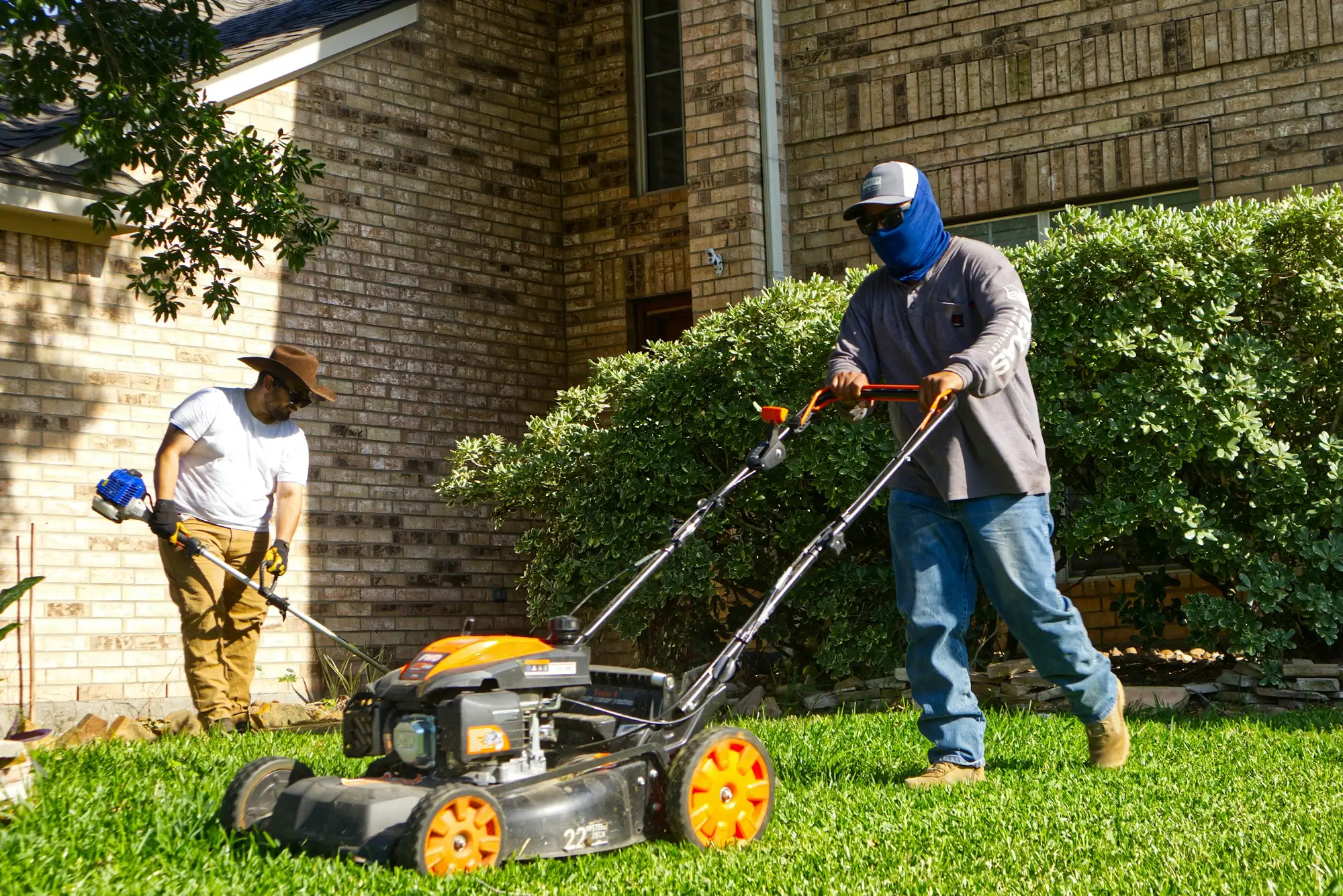
Landscaping leads show up in a rush, and most crews are not ready for it.
In US Google keyword data, searches for “landscaping near me” went from 49,500 in December 2025 to 165,000 in March 2026. “Lawn care near me” went from 33,100 to 165,000 over the same months, five times as many.
Those people are not browsing. They looked at the yard, decided it needs a crew, and will call one of the first names they see. This guide is about making that name yours without paying for every call.
Where landscaping leads come from, and the catch with each
There are only a handful of real sources. Each one does a job, and each one has a catch.
Referrals and repeat clients. The best leads you will ever get, because the trust arrives with the phone call. The catch: you cannot turn the volume up when you need it.
Your Google Business Profile. The map results for “landscaper near me” are free and sit near the top of the page. The catch is that most crews set the profile up once and never touch it again.
Shared lead platforms. Fast to switch on, and you pay per lead. The catch is that the same homeowner often goes to several companies at once, so you are paying to compete.
Local Services Ads. Google’s own pay-per-lead ads, with a screening badge. The calls can be good, and they stop the day you stop paying.
Google Ads and social ads. Landscaping is visual, so before and after posts do well. Every click costs money, and the spend builds nothing you keep.
Search rankings (SEO). Pages on your own site that rank for the jobs you want in the towns you serve. The catch is time, because it takes months to build. After that, the calls come in with no fee attached to each one.
Only two sources on that list belong to you: your reputation and your website. The rest of this guide is about building the second one.
Why your landscaping season is decided before it starts
Most landscaping companies start marketing when the phone goes quiet. That is backwards.
From December 2025 to March 2026, “landscaping company near me” climbed from 12,100 to 40,500 monthly US searches. “Landscapers near me” peaked in April at 165,000.
Pages take months to rank. A page you publish in March ranks for a rush that has already happened.
Hardscape runs on a different clock. In the same data, “patio installation near me” hit 5,400 searches in September 2025 and dropped to 590 by November. Homeowners plan patios and walls in the fall, when the yard is still usable and the summer is fresh in their minds.
So the build happens now. Publish your maintenance pages in the fall and early winter so they have time to settle before March, and have your patio and wall pages live before next September.
If you are reading this in the fall, you are on time.
Decide which landscaping leads you actually want
Before you chase volume, decide what work you want more of. “Landscaping lead” covers three very different jobs.
Recurring maintenance. Weekly mowing, trimming, seasonal cleanups. Small tickets, but one good client can stay with you for years, so one lead can be worth several seasons of work.
Design and install. Patios, retaining walls, plantings, irrigation. Big tickets and good margins, with longer sales cycles and more quotes that go nowhere.
One-off jobs. Spring cleanup, mulch, storm debris. Easy to win and easy to lose, and often the first step toward a maintenance contract.

Your pages, keywords, and photos should match the work you want. If you would rather build ten patios than mow a hundred lawns, build the patio pages first.
Not sure what a new client is worth to you? Run your own numbers through our Lead Value Calculator. Most owners find their real number is higher than their gut said, and that changes how hard a lead is worth chasing.
Step 1: Set up Google Business Profile for a crew that drives to the job
For “landscaper near me,” the map results are often where the call happens. Google says local results come down to relevance, distance, and prominence, and it notes that more reviews and positive ratings can help.
You control more of that than you think.
Set it up as a service-area business. Your crew goes to the customer, so if nobody visits your yard, Google says to remove the address from the profile. You can list up to 20 service areas, kept within about two hours of driving from your base.
List the towns you want, not every town you could reach. Pick the ones where the jobs, the margins, and the drive time make sense.
Choose categories that match the work. Landscaper, lawn care service, landscape designer. Make the primary category the work you want most, then add the ones you genuinely do.
Post photos of real jobs every season. A fresh patio, a clean spring edge, a fall leaf cleanup. Stock photos tell a homeowner nothing about your crew.
Ask for reviews that name the job and the town. “Rebuilt our retaining wall in Brookhaven” is exactly what the next person searching for a retaining wall in Brookhaven wants to read.
Step 2: Build one page for each service in each town you serve
This is where most landscaping websites fall short. One “Services” page that lists mowing, hardscaping, irrigation, and cleanups ranks for none of them.
Google ranks pages, not companies. Four services across five towns is twenty pages.
Each page targets one service in one place, answers what that searcher needs to know, and ends with one clear way to reach you. It is the same local SEO structure that works for contractors in every trade.
One warning, and it matters. Google’s spam policies name pages targeted at specific regions or cities that funnel users to one page as doorway abuse. Twenty copies of one paragraph with the town name swapped is exactly that.
So make each page earn its place. Towns differ in soil, lot sizes, HOA rules, water restrictions, and what grows well. Write each page like someone who has worked those yards, because you have.
When you are ready to grow past your first few towns, here is how the multi-city structure scales without tipping into spam.
Step 3: Turn finished jobs into pages that sell the next one
Landscaping sells with the eyes. A homeowner choosing between three crews wants to see what their own yard could look like.
Give every big job a short project write-up: the before, the after, the town, the materials, and the problem you solved. A drainage fix in a clay-soil backyard is a page that ranks for the next clay-soil backyard with a drainage problem.
Those same photos feed your Google Business Profile and your social posts. You do the work once and use it three times.
Step 4: Use Local Services Ads as a bridge you can walk off
In the US, Google lists both landscaping and lawn care as Local Services Ads categories. Screening includes liability insurance and state-level license checks, plus background checks for some businesses.
The model is pay per lead, and that is not changing. Google is moving Local Services Ads into Google Ads as Performance Max campaigns with pay-per-lead goals. Lawn care is among the categories in the first phase, starting in August 2026, and service-area businesses without a physical location are scheduled for later in 2026.
The calls can be good. The tradeoff is the same as any rented source: the price depends on how many other crews compete in your area, and the calls stop when the budget does.
Our view is simple. Running these ads while your pages ramp is a sensible bridge through one spring. Making them the whole plan means renting forever.
What a shared landscaping lead really costs you
The mechanism is simple. A homeowner fills out one form about a spring cleanup, and that request can go to several landscapers at once.
Everyone races to the phone. The homeowner picks whoever answers first, then whoever quotes lowest, and you pay for the lead whether you win the job or not.
So the real cost is not the price per lead. It is the price per lead divided by the share you close. Close one in five, and every job you win costs five leads.
SEO changes that math. The homeowner found you, alone, and your cost per call falls every month the pages keep working. For the full comparison across trades, see our breakdown of leads for contractors.
The honest timeline for landscaping leads from SEO
Anyone promising page one by next week is selling something. Here is what the curve actually looks like.
Months 1 to 3 are build months. Pages go live, the profile gets cleaned up, links start. Organic calls are rare, and that is normal.
Months 3 to 6, rankings climb. The first calls usually come through the narrow pages first: one service, one town.
From month 6, it compounds. Every ranked page keeps producing calls, with no fee attached to each one.
Here is our proof, from the trade next door. When a Perth paving company came to us, it had generated between zero and one lead in six months from an outdated site with only a few pages. The work was excellent, and the company was invisible online.
After a rebuild with a dedicated page for every paving service and suburb, the site produced 68 leads in a single month, hit #1 on Google for “Perth pavers” and had 37 pages cited in AI search. Paving shares the shape of landscaping, with outdoor jobs, a defined service area, and customers who search by suburb.
That result took months of build and climb before it compounded, and that is the kind of patience this model rewards. It is also why 94% of our clients stay past the 24-month mark.
If you need calls this spring and have nothing built, SEO alone is the wrong tool for this spring. Plan a bridge, and build for the next one.
Do it yourself, or hire it out
You can absolutely do this yourself. Everything above is the real playbook, and an owner who can write twenty honest service pages over a winter needs no agency. If that is you, our DIY SEO guide goes deeper.
If you would rather spend the winter quoting jobs than writing web pages, here is exactly what hiring us costs, because hidden pricing is a red flag:
- Owned SEO infrastructure at $2,800 per month. We build and rank the site, and you own the domain, the content, and the rankings. It compounds, and it is transferable and sellable with the business.
- Website rental at $1,200 per month plus a $1,500 one-time setup. A ranked site sending exclusive calls in your territory, month-to-month with no contracts, for crews who need the phone ringing before an SEO build ramps.
Both paths get you customers. The right one depends on your timeline. The strategy call is 30 minutes, there is no hard sell, and if we are not the right fit, we will tell you who is.
Stop renting your spring. Build the thing that brings it to you.
Landscaping leads: quick answers
What is the best way to get landscaping leads? Referrals give the best quality but are hard to scale. Of the sources you can build on purpose, a ranking website plus a well-run Google Business Profile is the one you own.
When should a landscaping company start SEO? In the fall or early winter for maintenance work, since demand peaks around March and April. Patio and wall pages should be live before the September planning season.
Are shared landscaping leads worth it? Some crews make them work with fast callbacks and high volume. Divide the price per lead by your close rate first, because that is what each won job really costs.
Should I run Local Services Ads or do SEO? They do different jobs. The ads charge per lead and stop when you stop paying, while SEO takes months but keeps producing calls you do not pay for one by one.
Is SEO worth it for a small lawn care business? Often, yes. A handful of new maintenance clients each spring can carry the whole year, and the search demand in your area already exists.