
SEO for Pool Builders: How to Rank Before Pool Season Starts (2026)
At a glance: SEO for pool builders works because pool buyers do their shopping online months before they ever call a crew. The search data shows it: “pool company near me” runs about 14,800 searches a month in November and December, then 60,500 in June. The builders who get the call are the ones whose pages were already ranking when the homeowner started pricing. We built that kind of owned search presence for a New Zealand tree company, which went from $79K to $373K in annual revenue over 19 months. This guide covers what to build, in what order, the honest timeline, and what it costs whether you do it yourself or hire us.
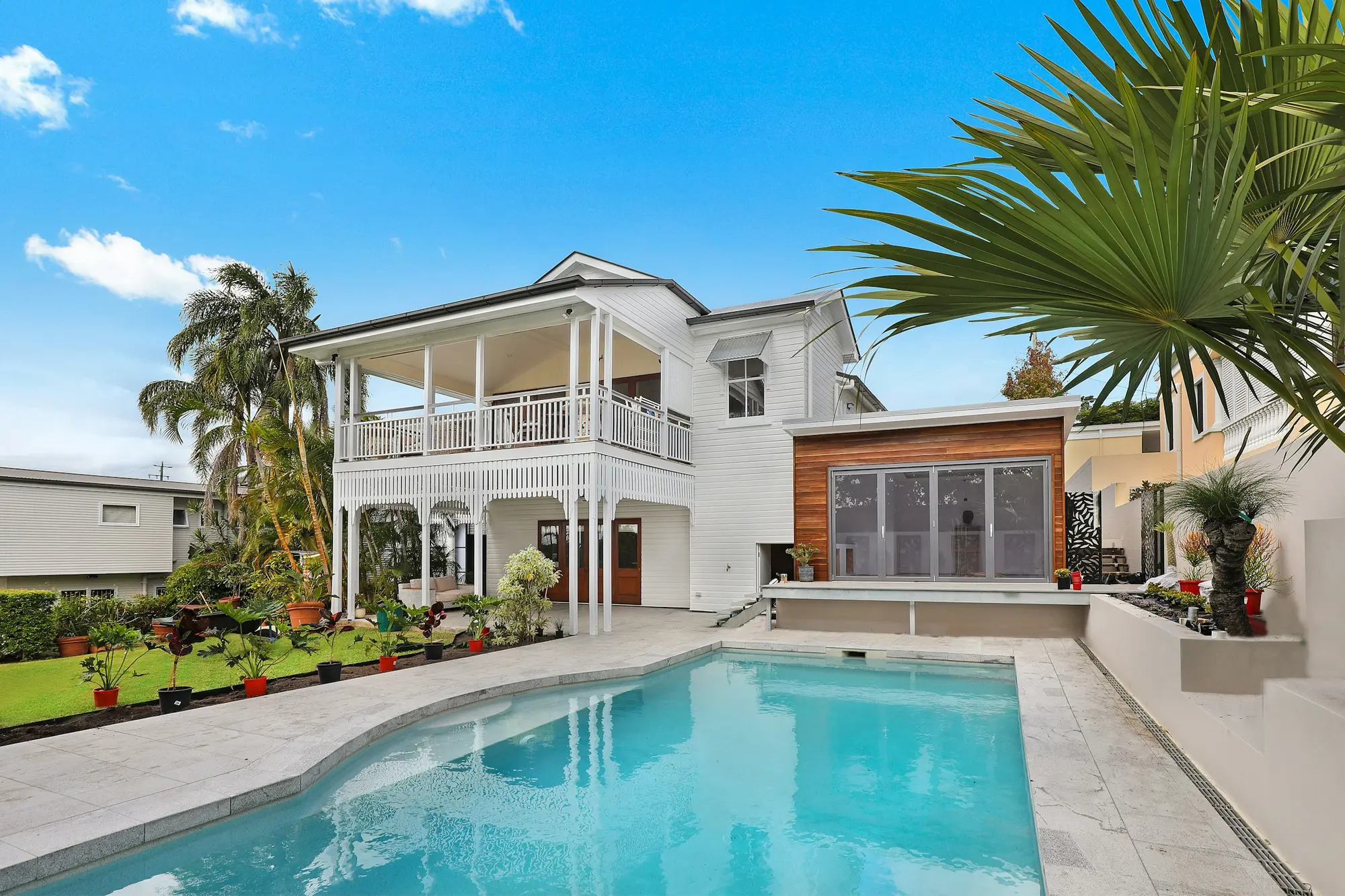
A couple spends a January evening on the couch, looking at their dead patch of backyard. Nobody is swimming. They type “inground pool cost” into a phone, then “pool builders near me,” and start a list of three names.
They will not call anyone for weeks. By the time they do, the list is already made.
That list is what SEO for pool builders is about. This guide shows how to get your name on it before the season starts, and how to make sure the call comes to you alone.
How pool builders get leads, and the catch with each source
A pool is a slow, big-ticket sale. Every source below has a job and a catch.
Referrals and neighbors. A new pool gets seen by everyone on the street. The catch: it grows at the speed of word of mouth, and it dries up in a slow market.
Your Google Business Profile. The map results for “pool builders near me” are free and sit near the top of the page. Most crews fill the profile in once and never touch it again.
Shared lead platforms. Fast to turn on, and you pay per lead. The same homeowner request often goes to several pool builders at once, so you pay for a seat in a race.
Google Ads. In US keyword data, a click on “pool builders near me” costs around $17.69. That is a click, not a signed contract, and the spend builds nothing you keep.
Local Services Ads. Google’s pay-per-lead ads. Pool has its own categories, covered in Step 5.
Search rankings (SEO). Pages on your own site that rank for each pool type in each town you serve. They take months to build. After that, the calls arrive with no fee attached to each one.
Only two of those belong to you: your reputation and your website. The rest of this guide is about the second one.
Pool searches peak in summer, so build in the winter
Pool demand has a loud season and a quiet one, and the numbers are stark. We pulled US Google keyword data for the last twelve months.
“Pool company near me” ran at 14,800 searches a month in November and December, 40,500 in March and April, and 60,500 in June. “Pool installation near me” went from 3,600 in November and December to 22,200 in June and July.
The research searches lead the buying. “Inground pool cost” sat at 5,400 in January, climbed to 18,100 in March, and hit 27,100 in June and July. “Fiberglass pool cost” went from 1,900 in November to 12,100 in June.
So homeowners price the pool in the spring, then pick a builder. If your cost and pool-type pages start ranking in June, you missed the people who made up their minds in March.
Look at the other direction too. The winter dip is when every other builder stops publishing. Pages you put up in January have months to settle before the spring rush.
You cannot publish a page in March and catch March. The work you do in the quiet months answers next season’s phone.
What a shared pool lead really costs you
A pool is one of the largest purchases a homeowner makes on the property. The sale has measurements, a site visit, a design conversation, and usually a long wait while financing and permits get sorted.
That is why shared leads punish this trade. One form about a backyard pool can go to several builders at once. Everyone races to the phone, the homeowner collects design ideas for free, and you pay for the lead whether you win or not.
The real cost is the price per lead divided by the share you close. Close one in five, and every pool you win carries the cost of five leads, plus the time it took to walk and measure the other four yards.
The time is the hidden bill. A site visit and a first design sketch is half a day you could have spent on a job that is already sold.
If you are not sure what one new pool customer is worth, run your numbers through our Lead Value Calculator. Most owners find the real number is higher than their gut said, which means a lead that never reaches a competitor is worth even more.
A homeowner who found you through your own page has not met the other builders yet. That is the whole advantage.
Step 1: Set up Google Business Profile for a crew that travels
You drive to the yard, so set the profile up as a service-area business. Google says local results are mainly based on relevance, distance, and popularity, and you control more of that than you think.
Clear your home address if you run from home. Google’s guidelines say service-area businesses without a public storefront should hide the address. If you have a showroom or a display yard that customers can walk into, that changes the setup.
List the towns you build in, not every town you could reach. Google lets you set up to 20 service areas, within about two hours of driving from your base. A crew that hauls excavators and concrete trucks across a county loses money on the drive.
Pick categories that match the work. Make the primary category the work you want most, then add only what you genuinely do.
Post finished pools, not stock photos. A clean waterline, even coping, and a tidy equipment pad are the proof the next searcher wants to see.
Ask for reviews that name the pool and the town. “Replaced our cracked plaster pool with a new fiberglass shell in Maple Grove” is exactly what the next homeowner in Maple Grove is typing.
Step 2: Build a page for each pool type in each town you serve
This is where most pool builder websites fall short. One “Pools” page that lists concrete, fiberglass, and vinyl liner ranks for none of them.
Google ranks pages, not companies. Three pool types across six towns is eighteen pages.
Each page targets one pool type in one place, answers what that searcher needs to know, and ends with one clear way to reach you. It is the same local SEO structure that works for contractors in every trade.
One warning, and it matters. Google’s spam policies name pages targeted at specific regions or cities that funnel users to one page as doorway abuse. Eighteen copies of one paragraph with the town name swapped is exactly that.
So make each page earn its place. Towns on the same route are different jobs.
One town has tight lots where a plunge pool and a small deck is the real conversation. Another has acreage and room for a full-size pool with a spa. A third has high water tables or rocky soil that changes the dig and the price.
Write each page like someone who has set a shell in that ground, because you have. When you are ready to push past your first few towns, here is how the multi-city structure scales without tipping into spam.
Step 3: Publish your prices and timelines before the homeowner asks
Cost is the biggest question in this trade, and the search data proves it. Across the year, “inground pool cost” averages around 12,100 searches a month, “fiberglass pool cost” around 6,600, and “gunite pool cost” around 1,000.
Those searchers are not ready to sign today. They are comparing, and the crew that gives a straight answer is the crew that gets the call when they are ready.
Give each pool type you actually build its own page. Explain what each one costs to install, how long it takes, how it ages, and where it fits. If you do not build a type, say so and point people to what you do offer.
Then answer the price question out loud. Give your own range, drawn from your last twenty jobs, and what moves it: size, depth, site access, soil and water table, decking, and the equipment package.
Add a plain timeline too. From signed contract to first swim, what happens in what order, and what can slow it down. A homeowner who sees the steps trusts the builder who wrote them.
Permits get a page as well. “Pool permit” draws around 590 searches a month, peaking at about 1,000 in June, and the rules sit with the city or county. Tell homeowners what you handle for them and what they need to ask their local building department.
The crew that explains the price gets the call. The crew that hides it gets compared.
Step 4: Show the insurance, license, and warranty proof where homeowners can see it
A pool build means heavy equipment, a deep hole, and a crew in someone’s backyard for weeks. Homeowners know it, and they hesitate before handing a stranger a deposit.
Put the proof on your own pages. Name your coverage in the footer of every page, and state your license number where your state issues one.
Add a short note on what your warranty covers and what it does not. A builder who says “we stand behind the shell and the plumbing for this long, and we do not cover chemical damage from neglect” sounds like a crew that will answer the phone in year three.
Show real jobs from start to finish. The excavation, the steel or the shell going in, and the finished water tell the story better than any claim.
The crew with no insurance cannot copy that page.
Step 5: Know where pool sits in Local Services Ads
Pool has two categories in Google’s Local Services Ads requirements. Pool cleaners “provide pool cleaning services, upkeep, and hygiene maintenance.” Pool contractors “provide pool remodeling, repairs, and additional installation services.”
Read that second line closely. It describes remodels, repairs, and installation add-ons, so check with Google how a full new-pool builder fits before you build a plan around it. The page lists general liability insurance and state business and owner licenses for both categories, marked as applying only where local law requires them.
The ads are also changing. Google is moving Local Services Ads into Google Ads in phases. The first phase, starting August 2026, names plumbing, HVAC, electrical, roofing, and a few other categories, and pool is not on that list.
Service-area businesses without a storefront are scheduled for later in 2026, and Google says categories not moved in 2026 transition in 2027. Check what your own account shows, because the dates and categories can shift.
The calls can be good. The tradeoff is the same as any rented source: the price depends on who else bids in your area, and the calls stop when the budget does.
Running these ads while your pages ramp is a sensible bridge. Making them the whole plan means renting forever.
What we have proven, and what we have not
We have not published a pool builder case study yet, and we would rather say so than borrow someone else’s numbers.
What we have is a documented build in a trade with the same shape. A New Zealand tree company with 1,000 monthly searches in its market went from $79K to $373K in annual revenue over 19 months.
Tree work and pool work share a lot: a defined service area, a seasonal rhythm, a big ticket that needs an on-site estimate, and a homeowner who wants proof before a deposit. We wrote up how that build works in our guide to tree service SEO.
The structure transfers. Your results depend on your market, your competition, and how fast you publish.
The honest timeline for SEO for pool builders
Anyone promising page one by next week is selling something. Here is what the curve usually looks like.
Months 1 to 3 are build months. Pages go live, the profile gets cleaned up, links start. Organic calls are rare, and that is normal.
Months 3 to 6, rankings climb. The first calls usually come through the narrow pages first: one pool type, one town.
From month 6, it compounds. Every ranked page keeps producing calls, with no fee attached to each one.
Start now, in October, and the build months land in the slow winter. Your pages settle just as homeowners start pricing pools in March, with a full season of history behind them by next year.
It is also why 94% of our clients stay past the 24-month mark. If you need calls this week and have nothing built, SEO alone is the wrong tool for this week. Plan a bridge, and build for spring.
Do it yourself, or hire it out
You can absolutely do this yourself. Everything above is the real playbook, and an owner who can write a dozen honest town pages over a slow winter needs no agency. If that is you, our DIY SEO guide goes deeper.
If you would rather spend your evenings on designs and site visits than on web pages, here is exactly what hiring us costs, because hidden pricing is a red flag:
- Owned SEO infrastructure from $2,800 per month. We build and rank the site, and you own the domain, the content, and the rankings. It compounds, and it is transferable and sellable with the business.
- Website rental from a $1,500 one-time setup. A ranked site sending exclusive leads in your territory, one operator per market, month-to-month, for crews that need the phone ringing before an SEO build ramps.
Both paths get you customers. The right one depends on your timeline. The strategy call is 30 minutes, there is no hard sell, and if we are not the right fit, we will tell you who is.
Stop paying to share the call. Build the thing that brings it to you.
SEO for pool builders: quick answers
Does SEO work for pool builders? It works because pool buyers research for weeks before they call. Pages that rank in the spring research window get found while the homeowner is still building their list.
When should a pool builder start SEO? In the off season. In US data, “inground pool cost” runs about 4,400 searches a month in November and December and 27,100 in June and July, so pages built in winter are ready for the spring climb.
Are shared pool leads worth it? Some crews make them work with fast callbacks and tight estimating. Divide the price per lead by your close rate first, and count the site visits you lose on the ones you do not win.
Should I run Local Services Ads for a pool company? Pool has its own categories, but the contractor category describes remodeling, repairs, and additional installation services. The ads can work as a bridge, but they charge per lead and stop when you stop paying.
How long does SEO take for a pool builder? Plan on months, not weeks. The first three are build months, rankings usually climb from months three to six, and the results compound from there.