
Electrician Leads: How to Get Calls You Don't Share (2026)
At a glance: The best electrician leads come from homeowners who found you on their own, not from a form a platform sells to several shops at once. Electrical searches arrive in bursts, with emergency calls in the dead of winter, panel upgrades in high summer, and generator installs the week the power goes out, and we have built for that kind of local demand before: one tree company went from $79K to $373K in annual revenue in 19 months. This guide covers where electrician leads come from, how to build the source you own, the honest timeline, and what it costs whether you do it yourself or hire us.
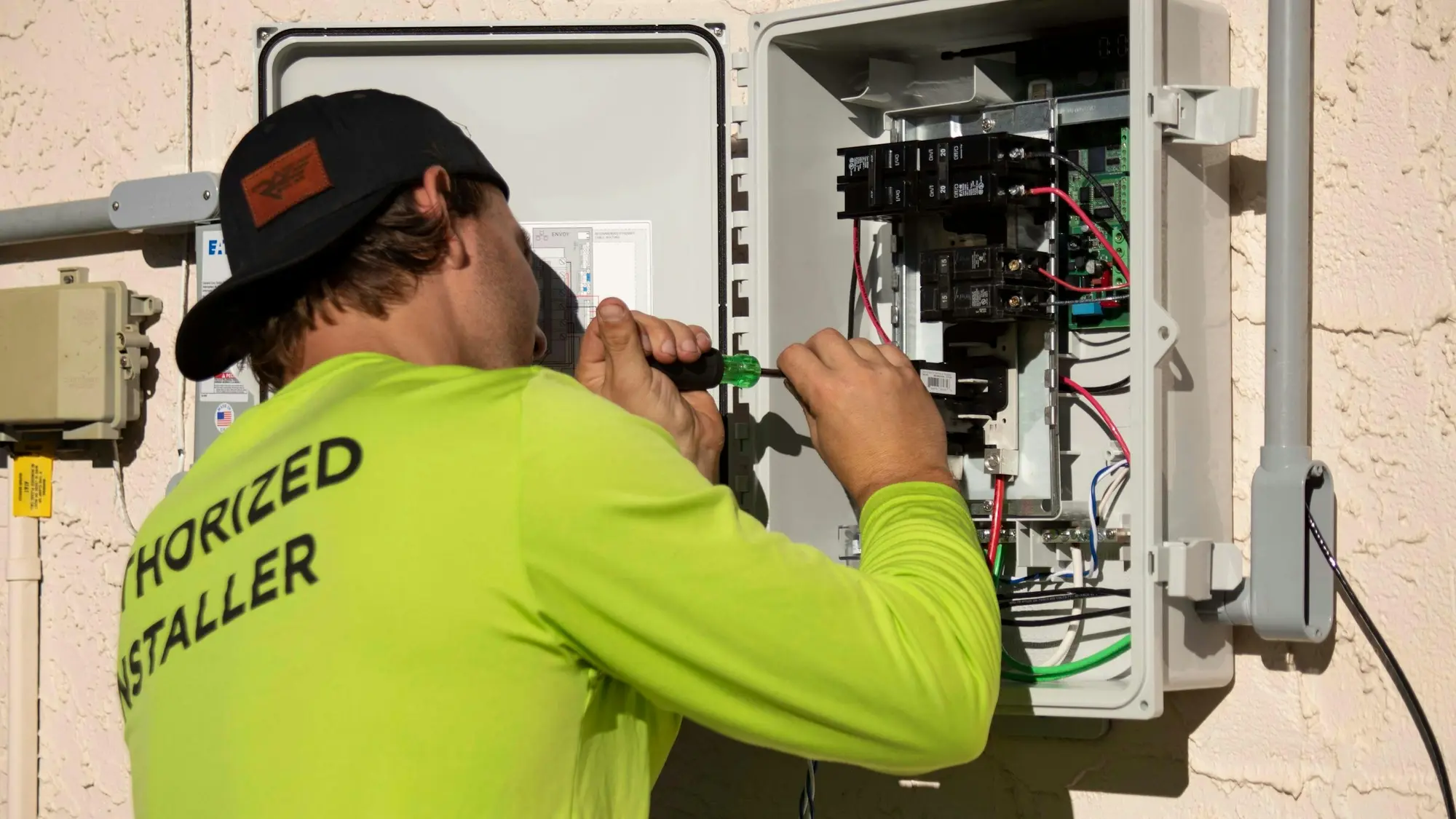
A breaker trips at 9 p.m., the kitchen goes dark, and somebody types “emergency electrician near me” into their phone.
In US Google keyword data, that exact search went from 5,400 a month in November 2025 to 18,100 in January 2026. Behind it sits “electrician near me” at around 368,000 searches a month, every month.
Those people are not shopping around for fun. They need a licensed electrician, they need one soon, and they will call one of the first names they trust. This guide is about making that name yours without paying for every call.
Where electrician leads come from, and the catch with each
There are only a handful of real sources. Each one does a job, and each one has a catch.
Referrals, repeat clients, and builders. The best leads you will ever get, because the trust arrives with the call. The catch: you cannot turn the volume up when the schedule has a hole in it.
Your Google Business Profile. The map results for “electrician near me” are free and sit near the top of the page. Most shops set the profile up once and never touch it again.
Shared lead platforms. Fast to switch on, and you pay per lead. The same homeowner often goes to several electricians at once, so you are paying to compete.
Local Services Ads. Google’s own pay-per-lead ads, with a screening badge. The calls can be good, and they stop the day you stop paying.
Google Ads. Every click costs money, and the spend builds nothing you keep.
Search rankings (SEO). Pages on your own site that rank for the jobs you want in the towns you serve. It takes months to build. After that, the calls come in with no fee attached to each one.
Only two sources on that list belong to you: your reputation and your website. The rest of this guide is about building the second one.
Electrician searches spike in bursts, so build before the next one
Most trades have a season. Electrical work has spikes, and they hit fast.
In the same US data, “whole house generator installation” sat at 5,400 searches in December 2025, jumped to 49,500 in January 2026, and fell back to 5,400 in February. “Electrical panel upgrade” went from 5,400 in June 2026 to 22,200 in July.
“Emergency electrician near me” climbed back to 18,100 in August 2026, the same peak it hit in winter. “Ceiling fan installation near me” went from 1,600 in November 2025 to 9,900 in January.
You cannot write a page the week a storm or a heat wave hits and expect it to rank. Pages take months to settle, so the generator page you publish today is the one that answers the next outage.
The spike always comes. The only question is whose name is on the page when it does.
Decide which electrician leads you actually want
Before you chase volume, decide what work you want more of. “Electrician lead” covers very different jobs.
Service and repair calls. Dead outlets, tripping breakers, flickering lights. Small tickets, fast to close, and often the first step to a homeowner who calls you for everything after.
Upgrades and installs. Panel upgrades, EV chargers, generators, rewires. Bigger tickets and better margins, with more quotes and longer decisions. “Electrical panel replacement cost” draws about 5,400 US searches a month, so homeowners are researching these jobs well before they call.
Commercial and builder work. Tenant fit-outs, new construction, maintenance contracts. Steady volume, but it runs on relationships and bids more than on search.
Your pages should match the work you want. If you would rather install ten generators than chase a hundred service calls, build the generator pages first.
Not sure what a new client is worth to you? Run your numbers through our Lead Value Calculator. Most owners find their real number is higher than their gut said, and that changes how hard a lead is worth chasing.
Step 1: Set up Google Business Profile for a shop that drives to the job
For “electrician near me,” the map results are often where the call happens. Google says local results are mainly based on relevance, distance, and popularity.
You control more of that than you think.
Set it up as a service-area business. You go to the customer. If you run the business from home, Google’s guidelines say to clear that address from your profile.
List the towns you want, not every town you could reach. Google lets you set up to 20 service areas, kept within about two hours of driving from your base. Pick the towns where the jobs and the drive time make sense.
Choose categories that match the work. Make the primary category the work you want most, then add only the ones you genuinely do.
Post photos of real jobs. A clean panel swap, a mounted EV charger, a generator on its pad. A homeowner deciding who to let into their basement wants to see your work, not stock photos.
Ask for reviews that name the job and the town. “Upgraded our 100 amp panel in Mount Vernon” is exactly what the next person searching for a panel upgrade in Mount Vernon wants to read.
Step 2: Build one page for each service in each town you serve
This is where most electrician websites fall short. One “Services” page that lists panels, EV chargers, generators, and repairs ranks for none of them.
Google ranks pages, not companies. Four services across five towns is twenty pages.
Each page targets one service in one place, answers what that searcher needs to know, and ends with one clear way to reach you. It is the same local SEO structure that works for contractors in every trade.
One warning, and it matters. Google’s spam policies name pages targeted at specific regions or cities that funnel users to one page as doorway abuse. Twenty copies of one paragraph with the town name swapped is exactly that.
So make each page earn its place. Towns differ in housing age, utility, permit office, and how many older homes still run 100 amp service. Write each page like someone who has opened panels on those streets, because you have.
When you are ready to grow past your first few towns, here is how the multi-city structure scales without tipping into spam.
Step 3: Be the electrician who answers after hours
Google itself treats electrical work as urgent. In its Local Services Ads rules, the electrician category is listed as urgent because people call for time-sensitive needs like exposed wiring and critical electronic failures.
That urgency is the opportunity. An emergency page only pays if somebody picks up the phone.
If you offer after-hours service, give it its own page: what counts as an emergency, which towns you cover at night, and a phone number that rings a person. If you do not offer it, say so plainly and point people to what you do offer.
Then answer the question searches. Around 1,600 people a month ask how much an electrician charges per hour. A straight answer on your own site, with your real range, wins the call from someone who is already halfway to hiring.
We wrote about the same urgent-call dynamic in our guide to plumber SEO, because the two trades share it.
Step 4: Put your license where the homeowner can see it
Electrical work is licensed work, and homeowners know it. Google’s own Local Services Ads requirements for electricians list state business and owner licenses, plus background checks.
Use that on your own site. Put your license number in the footer of every page, name the license type, and mention permits and inspections on the pages for jobs that need them.
It costs you nothing, and it answers the question a nervous homeowner asks before letting a stranger into the panel: is this person legit?
The unlicensed guy down the road cannot copy that line.
Step 5: Use Local Services Ads as a bridge you can walk off
Local Services Ads are pay per lead, and that is not changing. Google is moving Local Services Ads into Google Ads, and electrical is named in the first phase for US advertisers, starting in August 2026. Service-area businesses without a storefront are scheduled for later in 2026.
The calls can be good, and the badge carries real screening behind it. The tradeoff is the same as any rented source: the price depends on how many other shops compete in your area, and the calls stop when the budget does.
Our view is simple. Running these ads while your pages ramp is a sensible bridge. Making them the whole plan means renting forever.
What a shared electrician lead really costs you
The mechanism is simple. A homeowner fills out one form about a panel upgrade, and that request can go to several electricians at once.
Everyone races to the phone. The homeowner picks whoever answers first, then whoever quotes lowest, and you pay for the lead whether you win the job or not.
So the real cost is not the price per lead. It is the price per lead divided by the share you close. Close one in four, and every job you win costs four leads.
SEO changes that math. The homeowner found you, alone, and your cost per call falls every month the pages keep working. For the full comparison across trades, see our breakdown of leads for contractors.
The honest timeline for electrician leads from SEO
Anyone promising page one by next week is selling something. Here is what the curve actually looks like.
Months 1 to 3 are build months. Pages go live, the profile gets cleaned up, links start. Organic calls are rare, and that is normal.
Months 3 to 6, rankings climb. The first calls usually come through the narrow pages first: one service, one town.
From month 6, it compounds. Every ranked page keeps producing calls, with no fee attached to each one.
Here is our proof, and we will be straight about it: it is a tree company, not an electrician. When a New Zealand tree company came to us, the market analysis found 1,000 monthly searches for their services with low competition. The work was excellent, and the company was invisible online.
Nineteen months later, annual revenue had gone from $79K to $373K. Tree work shares the shape of electrical work: urgent jobs, a defined service area, and demand that jumps when the weather turns. We wrote up how that build works in our guide to tree service SEO.
That result took 19 months, and that is the kind of patience this model rewards. It is also why 94% of our clients stay past the 24-month mark.
If you need calls this month and have nothing built, SEO alone is the wrong tool for this month. Plan a bridge, and build for the next spike.
Do it yourself, or hire it out
You can absolutely do this yourself. Everything above is the real playbook, and an owner who can write twenty honest service pages over a slow season needs no agency. If that is you, our DIY SEO guide goes deeper.
If you would rather spend your evenings quoting jobs than writing web pages, here is exactly what hiring us costs, because hidden pricing is a red flag:
- Owned SEO infrastructure at $2,800 per month. We build and rank the site, and you own the domain, the content, and the rankings. It compounds, and it is transferable and sellable with the business.
- Website rental at $1,200 per month plus a $1,500 one-time setup. A ranked site sending exclusive calls in your territory, month-to-month with no contracts, for shops that need the phone ringing before an SEO build ramps.
Both paths get you customers. The right one depends on your timeline. The strategy call is 30 minutes, there is no hard sell, and if we are not the right fit, we will tell you who is.
Stop paying to share the call. Build the thing that brings it to you.
Electrician leads: quick answers
What is the best way to get electrician leads? Referrals give the best quality but are hard to scale. Of the sources you can build on purpose, a ranking website plus a well-run Google Business Profile is the one you own.
Are shared electrician leads worth it? Some shops make them work with fast callbacks and high volume. Divide the price per lead by your close rate first, because that is what each won job really costs.
Which electrical jobs should my website target first? The ones you want more of and can deliver well. For many shops that means panel upgrades, EV chargers, and generators, because the tickets are larger and homeowners research them before they call.
Should I run Local Services Ads or do SEO? They do different jobs. The ads charge per lead and stop when you stop paying, while SEO takes months but keeps producing calls you do not pay for one by one.
How long does SEO take for an electrician? Plan on months, not weeks. The first three are build months, rankings usually climb from months three to six, and the results compound from there.